الأربعاء، 31 يناير 2018

Tu'Bishvat 2018 - 70 Years 70 NEW Orchards -and- Tu B’Shvat Infographics

Tu'Bishvat 2018 - 70 Years 70 NEW Orchards

From The Jewish Press:


To help Israeli Farmers plant more fruit trees, go HERE


For Hebrew Visit: 

ט"ו בשבט: בגן עדן מקדם

הילדים שרים "ט"ו בשבט הגיע חג לאילנות". אך מה באמת אומרים לנו העצים והפירות?

ט"ו בשבט ראש השנה לאילנות - המנהגים וההלכות

אומרים תחנון או לא? מה סדר הברכות על הפירות? ולא לשכוח את האתרוג. מדריך הלכתי של מכון התורה והארץ


And an AISH INFOGRAPHIC:


For a much larger view, go to AISH

January’s Top Ten Review

The month is at an end so I thought it would be a good time for me to look back over my January goals to see how I did.  

1. Keep grocery purchases to minimal and work on using up what is on hand.
I’m pleased with how we did on this.  While I do not try to separate every piece of household or work related items out, we managed to do pretty well for January.  We spent $385.91 on food and $10.33 on a coffee and fast food meal.

2.  Utilize my planner to help keep things organized.
The planner is fabulous!  I’m able to keep things organized.  Including my school work.  I’m not sure why I didn’t do this before.

3.  Do my best to keep Sunday's free from school work.
This didn’t work.  I did my best, but these classes are intensive and a lot of them have work that is due on Sunday.

4.  Purchase or make Valentine's Cards to mail for next month.
I purchased.  No way was I going to find the time to make them.

5.  Finish the skull shawl I am crocheting. I still haven’t quite finished.  I’m one skeleton repeat and the edging from being there.  Gotta get in gear!

6.  Inventory my freezer. I did this...and I have pasted the list on the side of my refrigerator.  A bit of an eye sore, but I am being faithful about marking things off.  I know if it is too inconvenient I won’t....so this is working.

7.  Continue with my 12 Days of Pintos recipe share. Sigh....I think I got one recipe shared.  I have more recipes.  I’m just having a hard time getting to them.  I promise to keep trying.

8.  Menu plan for the month. I did this.  We managed to stick to it at least in spirit.  In fact, I’ve already made out February’s menu.

9.  Try at least one new pressure cooker recipe. I did this.  I love, love, love using the pressure cooker.  

10.  Don't stress myself by insisting on perfection -- go with the flow. I was hit and miss on this one.  I didn’t do horribly, and I think the only real meltdown I had was related to being sick.  I was just so tired I finally gave up and went to bed in the middle of the day.  A very rare occurrence for me.  

So I am considering this month a success.  Not perfect, but life rarely is.

ERETZ YISRAEL – Blue Supermoon Eclipse

الثلاثاء، 30 يناير 2018

My Best Tips for a Frugal and Simple Life

Hello Dear Reader,

I have written about my top 5 tips for living a frugal and simple life before but I thought I would expand on that list a little, it has however, morphed into more like, tips for a good life. I don't think I live the idyllic life nor do I think I have all the answers, these thoughts and strategies just work for me at this stage in my life.

Everyone is different, we all require something unique to fill any voids in our lives, what will float my boat will not float another, simply said, we must find out what makes us happy and follow that road. It's your life after all.

So, here are my best frugal/simple/good life tips that seem to round out my life, I would love to know what makes your life, frugal and simple. Join in

-Make home life a priority-you can't do housework if you're not at home, nor can dinner be on the table early if you are still at the shops until late. If you work full time, sleep for 8 hours, commute for anything from 1 to 2 hours that leaves only 5 to 6 hours out of your day to be at home. Make those 6 hours work for you, have a plan for what you will do with those precious hours.


-Drink more water, water is essential to a healthy body, if you are thirsty and tired, water can be the answer. No other drink will do what water can do, no matter what it says on the label, oh and it's free.


-Get to bed early-We all need sleep, some more than others, I need at least 8 hours to function the next day. Routine is the key, try to get to bed at the same time every night. Make your bedroom a retreat, no TV or clutter, clean sheets and comfy pillows make all the difference to the quality of sleep you have. Oh and it's free.

-Make your bed everyday-Again it is a routine, it's a great habit to get into. In saying that, I don't actually make my whole bed up every day. During Summer, I smooth the bottom sheet, pull up the top sheet and quilt and then turn the covers back neatly to air the bed. I then put the pillows on the bed. It looks neat and the bed gets a good air all day.


-Menu plan-if there is one habit that will save you time and money, it is to start menu planning, take 15 to 30 minutes prior to going shopping and write an extensive list of firstly what you are going to cook every night, eat for breakfast and lunch and then what you need for those meals/recipes. It's not rocket science and it saves you having to think again for the whole week ahead, what's for dinner that night. Take an inventory of anything that need using up before it expires, love and respect the food you buy, don't waste a thing.


-Stay out of the shops-unless you actually need something, don't go to the shops, it's not a healthy form of recreation, you will always find something you "want" rather than "need".

-Write lists-need something done, write it down and tick it off when it's done, if it didn't get done today, transfer it to tomorrow or a day when you know you will have more time to get "it" done.


-Move your body everyday-walk, ride, run, dance around the house to your favourite music (I do it when no one is home), garden, clean your house, clean your car, walk the dogs, whatever it takes, just move your body every single day. The human body was built to move. You don't need to join a gym, all the activities listed above are free.


-Eat Breakfast-it kickstarts your day like nothing else can. It supplies fuel for your body and brain to work as efficiently as they can, it also stops you reaching for something you maybe shouldn't be having at morning tea.


-Pack a lunch and snacks everyday for when you are out or at work-you don't need a gourmet lunch every day, just something simple, packed from home. Don't forget your water and tea or coffee, it is usually better quality than the stuff supplied by a work place and it is much much cheaper than buying it every day.


-Trial home made cleaners-bicarb, vinegar, borax, washing soda and eucalyptus oil are all quite cheap to buy and are very effective cleaners for your home. There is a myriad of "recipes" on the web using these products to clean just about everything in and around your home.

Home Made Paste Cleaner

Miracle Spray-it is the very best all purpose cleaner I have ever used

Sparkling clean Silverware cleaned with Home Made Silver Cleaner

Home Made Glass Cleaner

-De clutter-have less=clean less=more time to do what makes you happy, simple

-Use less-most bought cleaners, household products and personal care products are very concentrated, use less than the recommended and see if the results are similar.

-Grow herbs-if you only grow one thing, grow some herbs, parsley, coriander, basil, mint, oregano and rocket all grow like weeds and once established will supply you with all you need for a lot of recipes


-Have less clothes and shoes in your wardrobe-do you have too many items of clothing that it takes you forever to decide what to wear, have less in your wardrobe to reduce this dilemma.

-Keep it simple, don't over complicate life, the simplest solution is usually the best in most situations.

-Have less stuff in your bag and wallet, de clutter this area of your life too, you will feel lighter just by doing this one thing and the important things you need will be easy to find.

-Simplify your beauty routine-It will save you money and time. Over the years I have used just about every brand of reasonably priced skin care on the market, I have looked after my skin and guess what? I still have wrinkles! For me, it was time to simplify. I now just use water and a washer to cleanse my face in the morning and a solid cleansing bar at night to remove my makeup. I spritz my face with rosewater (I buy rosewater concentrate from China Town and dilute it 1:9 with filtered water) and follow it with a moisturising bar, morning and night. I use a solid shampoo bar to wash my very short hair and coconut oil as both a conditioner and a styling product. I use a solid deodorant bar and any natural body moisturiser for the rest of my body. And last but not least I use a sunscreen when going out into the garden or onto the beach. I know some of these products may seem expensive but being a solid concentrated product they last and last. I have had the cleanser for well over a year now and the moisturiser lasts me about 6 months.

-Have a two light rule in your home at night, there is no need to have all the lights on at night, only illuminate the rooms where you are at the time.

-Have another rule of two minute showers, where we live water charges are eye waveringly expensive, it's highway robbery at its best, reduce the amount of water you use, not just because of the cost but because water is a finite resource.

-Refuse, Reduce, Re-use, Recycle and Rot-we are at peak stuff, now is the time to look at what we can do to help our precious Earth.

-Delay purchases, often when you want something, you want it NOW, if you wait a little, maybe do some more research you will find it for a better price or realise you didn't need it after all.

-Compost-I found a compost bin on Gumtree for $5 and it is working like a charm, all fruit and veggie scraps, cardboard and waste paper products, now go in the compost bin. I add to it, turn it and water it weekly and it is making magical compost


-Be kind to the environment-I now find I question every purchase and every bit of plastic that comes into our home, how can I do it better and what legacy will I leave? Once you start hearing your inner voice saying"there's got to be a better way," you will often make the effort to find one. I find being environmentally aware often leads to using and buying less.

-Hang the washing on the line-sunshine is free, and here in the Sunshine State, it happens nearly every single day and it's free.

-Make bread-give it a go, it's easier than you think, not only will you know exactly what is in the bread but it smells and tastes amazing.


-Buy clothes that don't need ironing-life is too short to spend it ironing in the heat.

-What do you think? What would you add or subtract, to/from this list, for the frugal and simple life you're living or want to live?

Have a lovely day, Dear Reader
🌏Fi

One Year Ago-What we bought, spent and ate this week
Two Years Ago-What Does Your Day Look Like?

Poland’s New Law About the Holocaust

I haven’t been following the “Poland” story, but just today I read the following, and its diabolical how the Polish Government can enact a law to try and absolve Poland from Holocaust complicity! The adult generation of that time was implicitly aware. 
[See *footnote below]

The irony of its timing is inescapable.

Whitewashing Evil: Poland’s New Law about the Holocaust
by Rabbi Benjamin Blech

This past Friday marked the 73rd anniversary of the liberation of Auschwitz–Birkenau, the horrific site in Poland where more than one million Jews perished in barbaric murders beyond our imagination. Friday was also the eve of International Holocaust Remembrance Day, a day meant to serve as an everlasting reminder to the world of the sin of silence in the face of evil and the crime of complicity associated with those who made German genocide possible.

And this past Friday the Polish government passed a law which would place fines or up to three years in jail for claiming that Poland bears any responsibility for crimes against humanity committed by Germany on Polish soil.

True, the bill still needs final approval from the Polish Senate as well as the signature of the president. But its intent is clear. Poland, in the words of Beata Mazurek, spokeswoman for Poland’s ruling Law & Justice party and deputy speaker of the lower chamber of parliament, proclaims with righteous indignation that “We have had enough of accusing Poland and Poles of German atrocities.”

In short, Poland, a land where three million Jews lived before the war and only about 380,000 survived, a country selected by the Nazis for six extermination camps – Chelmno, Belzec, Sobibor, Treblinka, Auschwitz-Birkenau and Majdanek – and more than 700 ghettos, dare not any longer be challenged for the role it played during the Holocaust!

Historians, beware. Authors, journalists, even diarists and survivors of Polish anti-Semitism – be prepared for dire and severe consequences for failure to adhere to the new narrative of Polish victimization by Germany comparable to the fate of the Jews.

In all fairness, about 6,700 Poles were commemorated by the Yad Vashem Holocaust Memorial for rescuing Jews, the largest number in any country. Yad Vashem has also, for many years, acknowledged the possible misinterpretation of the phrase “Polish death camps” as referring not to location but to its creators – an unfortunate wording which does indeed need to be corrected to “Nazi death camps”.

Yet at the same time Yad Vashem continues to make clear that it was Poles who made the Nazi Holocaust in Poland possible. Without the cooperation of the local citizenry, sometimes passive and many times enthusiastically supportive, a program of mass murder would simply have been impossible. “[With that in mind] restrictions on statements by scholars and others regarding the Polish people’s direct or indirect complicity with the crimes committed on their land during the Holocaust are a serious distortion,” Yad Vashem said.

Similarly, the United States Holocaust Museum concluded: “To carry out the Final Solution across an entire continent, the Germans required the collaboration and complicity of many individuals in every country, from leaders, public officials, police, and soldiers to ordinary citizens. In every country locals participated in a variety of ways—as clerks, cooks, and confiscators of property; as managers or participants in roundups and deportations; as informants; sometimes as perpetrators of violence against Jews on their own initiative; and sometimes as hands-on murderers in killing operations.”

That is what is so upsetting about Poland’s attempt for legal whitewashing.

Yair Lapid, a member of the Israeli Parliament and son of a Holocaust survivor, made the case strongly: “I utterly condemn the new Polish law which tries to deny Polish complicity in the Holocaust. It was conceived in Germany but hundreds of thousands of Jews were murdered without ever meeting a German soldier. There were Polish death camps and no law can ever change that.”

Polish anti-Semitism has a long and well documented history. The eminent Polish historian Jan Grabowski, also the son of a Holocaust survivor and currently a history professor at University of Ottawa, made it his life’s mission to expose the truth of Polish participation in the killings of their Jewish neighbors, even though for decades Polish society denied that anti-Semitism motivated the slayings. Winner of the 2014 Yad Vashem’s International Book Prize, his book Judenjagd tells the heart-breaking story of Jews who, having survived ghetto liquidations and deportations to death camps in Poland in 1942, attempted to hide "on the Aryan side" where the majority perished as a consequence of betrayal by their Polish neighbors.

It is a story with horrible sequels.

The by now famous story pictured in Claude Lanzmann's myth-shattering documentary film Shoah demonstrated that many Polish peasants were keenly aware of the Nazis' mass murder of Jews on Polish soil; “Neighbors,” by Polish-American sociologist Jan Tomasz Gross, which explored the murder of Jews by their Polish neighbors in the village of Jedwabne, documents how nearly all of the Jews of Jedwabne, Poland, were murdered on one day, most of them burned alive by their non-Jewish neighbors.

Following the script of the “new narrative”, in a mid-July interview on Polish public broadcaster TVN, Education Minister Anna Zalewska insinuated that the Jedwabne massacre, when Poles burned alive more than 300 Jews in a barn, was a matter of “opinion.”

What might be called a post-Holocaust sequel is the tragic story of the 200 Jewish survivors who returned to their homes in Kielce following the war. They began to slowly rebuild their lives. They established a synagogue, a kibbutz, and an orphanage. On July 4, 1946, a blood libel spread through the town, falsely accusing the Jews of kidnapping a Christian child.

Kielce’s residents descended on the Jewish area. Repeating a scene so familiar to these Jews, the police and soldiers stood by and watched as the mob attacked them, murdering 42 Holocaust survivors and injuring scores more. No one could blame the remaining Jews who saw no other option but to flee the place they wrongly believed they could find a measure of peace and freedom. This was the beginning of a mass emigration of Jewish survivors from Poland.

True, Poland was not Nazi Germany and, although in Poland, it was not the Poles who conceived the concentration camps. Yet any serious historian recognizes Polish guilt. The guilt of collusion and complicity. The guilt of silence in the presence of open and well-known barbarity. The guilt of avidly taking for themselves the possessions of innocent neighbors who they witnessed being taken to their deaths. The guilt of joining in all too often in the evil all around them, at times with even more joy and pleasure than the Nazi perpetrators.

This guilt can’t simply be erased by a law which forbids expressing it. Alongside the commission of the crime itself, making it a crime to remember and record it is itself immoral and depraved.

This article is from AISH.com
––––––––––––––––––––––––––––––––––

* My family came to America before WWI, when the Jews were experiencing pogroms in Russia and elsewhere. When my Mother (born in America) was living with us, I hired young girls to be companions for my Mother, as she found them interesting and liked to talk to them about their lives, etc. (this was about 13-14 years ago). Some of these girls were from Poland, and were very attentive to and creative for my Mother. One even drew pictures to give to her. In her condition, these girls were therapeutic for her. She enjoyed their company greatly. These Polish girls were very drawn to elderly Jewish women, davka because of WWII and the atrocities they read about that happened in Poland during the War. They were sincere in wanting to relate to Jewish people, to get to know them and learn about them. This is what they shared with me.

So, we see that the older generation, closer to the War days, don’t know what to do with their guilt. Many of the young generation (several years ago) was astonished (and might I say very sad about it). But since then, the Palestinians have been relentless in spreading evil and lies all over the world. That has influenced many minds. So, the atmosphere seems to have changed, again, in Poland, the infamous locale of evil. Anti-semitism might once again be rising in the political arena.

While people succumb to this assault, we Jews realize (or should recognize) that it is once again the “Stick of Hashem” chasing His children home to Eretz Yisrael.


A Family Home where Nordic meets Bohemian Style

Hej heej! How are you today? I'm on a mini road trip with my friend Linda to the beautiful Gothenburg archipelago on Sweden's West coast. I've never been in the winter before and I'm really curious to see what it's like - plus I'm a girl on a mission (to be revealed later over on Instagram stories!). Since I'm feeling kind of relaxed today (and relieved to have got through my twelve BBC live radio shows yesterday - yes twelve!), I thought I'd share the vibe here on the blog with this lovely house in Maplewood, New Jersey belonging to Tanya Meda of @houseofsixinteriors. I caught up with her to find out a little more about her home.  Pour yourself a coffee (or a cheeky glass depending on what time it is where you are), put your feet up and enjoy - there's so much to look at!
 

Who do you share your home with?
My husband Carlos and 4 kids - Dylan, Emerson, Beckett & Peyton.


How did you come up with the name @houseofsixinteriors for your instagram feed?
From the very beginning, my family has always been my inspiration. My goal is to create spaces that are family friendly but don't skimp on style.


Tell me about your style?
I would describe it as Nordic meets bohemian.


What is the most important thing to you when it comes to decorating?
My goal is to create a space that's cosy and inviting. I try to do this using textiles, plants and art.


What do you love most about your home? 
Honestly, I love that our family was created here. Carlos and I bought this home when it was just the 2 of us and we filled up the rooms quickly and happily. I have such as emotional attachment to our home... it's more than just a house for us. 


How would you describe the atmosphere in your home?
I think that the love we share comes through as soon as you walk in, creating a warm and welcoming home. At least, I hope that's what everyone feels when they walk in!


I can well imagine that warm and welcoming feeling just by looking at the pictures, how about you?

Here's a very quick guide on where to find some of the pieces: Maroc tribal sells beautiful beni ourain and vintage kilim rugs, macrame wall hanging, peacock chair, sputnik chandelier - check out the tags on @houseofsixinteriors if you're looking for something specific.

Thank you so much for inviting us into your home Tanya (& Co!).

If you'd like to see more of Tanya's feed it's well worth checking out her daily feed! And there's also this archive (packed with 'bohemian style' homes) to work your way through too!
Have a lovely day / evening! 

The Zohar Reveals a Few Secrets About the Fruits of the Land of Israel

The Zohar Reveals a Few Secrets About the Fruits of the Land of Israel
From the teachings of *Rabbi Shimon bar Yochai; translation and commentary by **Shmuel-Simcha Treister, based on Metok MiDevash

The seven most important fruits of the Land of Israel are listed in Deut. 8:8. In describing the good land that G‑d was about to give the Jews, the verse specifies that it is: "A land of wheat, and barley, and grapes, and figs and pomegranates; a land of olive oil and honey". The Hebrew word for "honey" is "d'vash", and in Talmudic literature it means what we now call jam or fruit jelly. Below is how the Zohar regards each of these seven fruits in various different contexts.

Wheat

[The daily sacrifices offered to G‑d in the Temple included] "a tenth part of an ephah of flour for a meal offering, mixed with the fourth part of a hin of beaten oil". Why this measurement? One tenth of an ephah corresponds to the Jewish People [the sefira of malchut] which is the tenth level [of the ten sefirot]. This offering needs to be given using both hands [representing the arms of chesed and gevura of Zeir Anpin which raise up the sefira of malchut for the purpose of uniting with it]. The meal offered in this manner represents meal from which bread is made and is called "bread".

["Bread" is always a feminine noun in Hebrew, and represents the sefira of malchut]. [Malchut] is called bread, and this is the reason why there is no angelic minister ruling over the five species of grain, namely wheat, barley, rye, spelt, and oats. There will never be a minister ruling over them - only the Holy One, blessed be He. Because of this, whoever treats bread disrespectfully, throwing it to the ground, will be pursued by poverty. (Zohar, Num. 244a)

Wheat represents the divine abundance in the physical world. Bread, "the staff of life", represents the sefira of malchut when it is connected with Zeir Anpin, and the higher light flows in it. Only the light of G‑d unites with malchut, and this is the reason that no other ministering angel is associated with it. The divine light is repelled by ego…

When malchut is disconnected from the higher light it is called "poor". By throwing bread on the floor a person is symbolically taking the sefira of malchut and cutting it off from its elevated source. This in turn causes malchut to be "poor", and the spiritual law of cause and effect is activated, in turn causing poverty to he who treated bread with disrespect.

Grape

Rabbi Abon said that there is nothing in the whole world other than wine that lifts up a person's heart until he is proud and haughty. This was the cause of the punishment of Nadab and Abihu [the sons of Aaron] who ate and drank [wine, and then entered into the Tabernacle to serve G‑d] and had haughtiness in their hearts. This is the "foreign fire" that they offered that was not commanded of them.

Rav said that two things don't sit well with each other, wine and the service of heaven as we have learned there, "Don't pray while drunk" (Eruvin 64a). Thus a person who is inebriated should not pray, and if he prays, his prayer is loathsome.

The worst character trait is pride. The divine light is repelled by ego, not attracted too it. A small amount of wine uplifts the heart but overindulgence causes haughtiness and insensitivity and leads to anger. Thus the emotions rule over consciousness and the Neshama is repelled, leaving no vehicle to receive the divine light.

Rabbi Yitzchak said there is no wine called "good wine" better than the wine of the Land of Israel, and best of them all is the wine of the Upper Galilee because a person couldn't drink half a log from it without getting drunk. (Zohar Chadash, Gen. 22b)

Of course the sages are here also referring to the secrets of the Torah that were revealed by Rebbe Shimon in the Upper Galilee, but, as in all Kabbala, the spiritual reality is matched by the physical reality. Interestingly in the last 5 years there has been a great increase in grape production in the Upper Galilee, and the wine has been getting gold medals at the best wine festivals in the world!

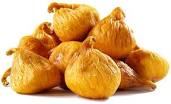
Fig

Rebbe Shimon said [as a parable explaining why the Moabites were not destroyed for attacking Israel], "You can't compare someone who is going to collect figs in the future [referring to Ruth and Na'amah] to someone who has already picked them". Rabbi Elazar said, "Even if they were already picked, the tree is to be praised [and worthy of protection - so the future of Ruth and Na'amah could have been protected by G‑d in another way]. He [Rebbe Shimon] replied to him, "Somebody who hasn't collected the figs, guards the tree constantly so that there should be no blemish; this is for the sake of the fruit that is to come from it in the future. Once the figs are harvested, he leaves the tree and stops guarding it.

So it was with Moab that was in the future to bring these figs. The Holy One, blessed be He, guarded them as is written, "Don't harass the Moabites and don't go to war with them" (Deut. 2:9). But about Midian, which had already given its figs, which had been collected from them [Jethro and his children], it is written, "Harass the Midianites and strike them, for they harassed you with their wiles" (Num. 25:17, 18). From this point on, this fig tree was not destined to give fruit. (Zohar, Num. 188a)

A fig is full of seeds which are like future generations that issue from the people of any particular nation. As long as there is a truly righteous person still to emerge from that nation G‑d guards that nation from harm - even if it is hard for us to understand why from our time-bound point of view!

Pomegranate

[Regarding the High Priests coat it is written] "A golden bell and a pomegranate, a golden bell and a pomegranate, upon the hem of the robe all around it." (Ex. 28:34). We have explained this [that the pomegranate with its many seeds represents the souls of Israel and their many good deeds, and the bells sound their praise] and everything was designed in accordance with the higher spiritual worlds as we said, for what is written [in the following verse]? "And his sound shall be heard when he goes into the holy place before G‑d [the Holy of Holies], and when he comes out, that he should not die."

This is because there is a need for a voice to be heard [below in the sound of the bells to arouse the higher "voice"] and then blessing will flow down and imbue the world. [The High Priest is worthy to cause this] because he [represents the sefira of chesed that causes] all to be blessed and serves on behalf of all.

We have explained the golden bells, and the [reason for the] pomegranate is that [the High Priest] is full like a pomegranate that has more seeds than all other [fruits]. (Zohar, Ex. p.231a)

When the High Priest entered the inner sanctuary of the Temple, the pomegranates on his robe symbolized each and every soul in Israel that he was representing.

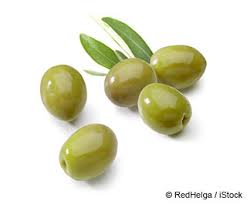
Olive

[As a result of the modest behavior of a Jewish mother she merits that] "Your children will be like olive saplings around your table." (Psalms 128:3) What does this mean; the children will be like olive saplings? Just like the olive tree doesn't lose its leaves, whether in winter or summer, and it always is more important than the other trees [giving fruit to eat and light to see by in the form of olive oil], so will her children rise to be more important than the rest of people of the world. (Zohar, Num. 126a)

Olive oil represents the sefira of chochma which is always full of fresh insights. Modest behavior in the home represents submission to a higher code of conduct and results in a woman never losing her freshness. This in turn leads to children who, because of their fresh insights, are more important in the world. (For example, 25% of Nobel Prizes come from less than .002 of the world's population!)

***Honey 

The righteous one eats to satisfy his soul…

"Out of the eater came food, and out of the strong came sweetness." (Judges 14:14) There is a support for this verse from another source. What is written "from the eater" refers to the tzadik [sefira of yesod, which "eats" all of the powers of the sefirot above it] as is written; "The righteous one eats to satisfy his soul". The [sefira of yesod, or the] righteous one certainly eats and takes from all [gathering all the higher lights]. Why [does the sefira of yesod have to receive all this]? It is in order to satisfy his soul, meaning in order to give satisfaction to that place which is called "the soul of David" [malchut].

And the words "came food" indicate that if it were not for the tzadik no sustenance would come down to the world and it could not continue to exist. "From the strong came sweet"; this refers to Isaac [gevura] who blessed Jacob [tiferet] that he receive from the dew of the heavens and the fat of the earth. Also, even though they seem different the explanations are all one [in referring to gevura passing on sustenance] because if wasn't for the side of strict judgment honey could not emerge. 

What is the secret of honey? It is the oral law as it is written: "The judgments of G‑d are a mixture of truth and righteousness together. More to be desired than gold, even very fine gold; sweeter also than honey and the honeycomb." (Ps. 19:10) The strong is the written law, as in the verse "G‑d will give strength to his people". From this strength came out sweet that is the oral law. (Zohar, Gen. 240a)

This is the source for the custom to start teaching little children the alef-beit with letters dipped in honey.


––––––––––––––––––––––––––––––––––––

* Rabbi Shimon bar Yochai, also know by the acronym "Rashbi," lived in the Holy Land in the 2nd century C.E. A disciple of Rabbi Akiva, Rashbi played a key role in the transmission of Torah, both as an important Talmudic sage and as author of the Zohar, the most fundamental work of Kabbalah. He was buried in Meron, Israel, west of Safed.

** Shmuel-Simcha Treister is a lawyer from New Zealand who made aliya to Safed with his family in 1993 to study Zohar. He continues doing so to this day. He also works in the Ascent multi-media center. © Copyright, Chabad.

Source: Chabad.org
Photos from Wikipedia

––––––––––––––––––––––––––––––––––––

*** When the Torah refers to Honey, it is date honey. balashon

While the term "honey" (dvash in Hebrew) appears 55 times in the Bible, it refers to date or fig honey in all but two references: Judges 14:8-9, when Samson took honey from the lion's carcass, and I Samuel 14:27, when Jonathan dipped his rod in a honeycomb during a battle and his countenance brightened.

Sarna has a similar note in his commentary on Shmot 3:8 -

Honey in the Bible (Heb. devash) is predominantly the thick, sweet syrup produced from dates and known to the Arabs as dibs. Apiculture seems to have been unknown in Palestine; the few explicit references in the Bible to bees' honey pertain to the wild variety. While the date itself is never mentioned, the inclusion of honey among the seven characteristic products of the land listed in Deuteronomy 8:8 indicates that, like all the others, it too derives from the soil.

I happened to take out a book from the local library that discusses this issue in detail: Fruit Trees in the Bible and Talmudic Literature, by Yehuda Feliks (Rubin Mass, 1994). The chapter on dvash is in Hebrew, and I can't quote the entire thing here, but I highly recommend it to anyone interested in the subject. I will summarize a few points he brings up:

The phrase ארץ זבת חלב ודבש ("land flowing with milk and honey") in the Torah is clearly referring to honey from fruit trees, as it is praising the agricultural bounty of the land. However, in Yeshayahu 7:22, when it mentions כי חמאה ודבש יאכל כל הנותר בקרב הארץ "Everyone who is left in the land shall feed on curds and honey", it is a parody of the Torah verses. For here, the prophet is describing a time when the land is desolate - and therefore the bees can proliferate. (The milk for the curds will also be widely available, because the cows and sheep will be able to graze on the previously tended croplands).

Bee honey is not seen as a sign of blessing for the land, even though it is seen as fortunate to find it (as in the story of Yonatan mentioned above). Yaakov also probably sent bee honey to Yosef (Bereshit 43:11), because it mentions מעט דבש - "a small amount of honey", and bee honey would have been hard to obtain.

Many sources where the honey is mentioned as coming from rocks (Devarim 32:13, Tehilim 81:17) it is likely referring to fig honey, as figs (unlike dates) grow in rocky terrain.

Although the rabbis generally identify the biblical dvash with dates (Sifrei Devarim 297, Mechilta D'Rashbi 13:5), when they used the word dvash themselves, they were referring to bee honey. For example, the Yerushalmi (Bikkurim 1:3) interprets the biblical word: "And dvash - this is dates. Could it be actual dvash (e.g. bee honey)?" They answer that since the dvash in the verse is obligated in tithes, it cannot be referring to bee honey, but rather date honey. We also see that if someone makes an oath that they will not eat dvash, they are allowed to eat date honey (Nedarim 6:9)

While the article was written before the recent discovery (and sadly Prof. Feliks passed away last year, and did not merit to review it), I don't think the discovery radically challenges anything in the article. Certainly bee honey was considered a rare treat, and there would have been efforts to make the product more widely available. And by Talmudic times, these efforts had succeeded so well, that bee honey became the dominant meaning of "dvash”.

But the meaning of eretz zavat chalav u'dvash still refers to the agriculture of the Land of Israel, particularly, as Feliks points out, in comparison to that of Egypt, whose dates were much dryer and did not easily produce honey.